Opening your washing machine after a complete cycle and finding water still sitting inside the drum can be frustrating. A Washing Machine Not Draining Water properly can leave clothes soaking wet, prevent the spin cycle from starting, create unpleasant odors, and disrupt your entire laundry routine. While some drainage problems are caused by simple issues such as a clogged filter or kinked drain hose, others may involve a faulty drain pump, damaged sensor, blocked internal pipe, or electronic control problem.
For homeowners across Dubai, addressing washing machine drainage issues early can help prevent water leaks, additional component damage, and more expensive repairs. Continuing to operate an appliance that cannot drain properly may place unnecessary pressure on the pump and other internal components.
Understanding why your Washing Machine Not Draining Water is the first step toward finding the right solution. In this guide, we’ll explain the most common causes, warning signs, practical troubleshooting steps, preventive maintenance tips, and when to contact Fix My Appliance for professional washing machine repair services in Dubai.
What Is the Washing Machine Drainage Problem?
A washing machine drainage problem occurs when wastewater cannot leave the appliance correctly during or after the wash cycle.
During normal operation, the washing machine removes dirty water from the drum using a drain pump. The water passes through the filter and drainage hose before entering the household wastewater system.
If the filter, hose, pump, or another component becomes blocked or damaged, the washing machine may fail to drain.
Common symptoms include:
- Water remaining inside the drum
- Clothes staying soaking wet
- Washing machine not entering the spin cycle
- Slow drainage
- Unpleasant smells
- Unusual humming or grinding noises
- Water leaking from the appliance
- Drainage-related error codes
Many homeowners search online for questions such as why is my washing machine not draining, how to remove standing water from a washing machine, why are my clothes still soaking wet, and how to fix a washing machine that won’t drain.
Identifying the exact cause is important because repeatedly running a washing machine with drainage problems can increase pressure on internal components and make the problem worse.
Common Causes of a Washing Machine Not Draining Water
Clogged Drain Pump Filter
A blocked drain pump filter is one of the most common reasons for a Washing Machine Not Draining Water after a cycle.
The filter is designed to catch small objects and debris before they enter the drain pump.
Over time, the filter can become blocked by:
- Lint
- Coins
- Buttons
- Hair
- Small pieces of fabric
- Tissue
- Other debris
When the filter becomes clogged, water cannot leave the appliance efficiently.
Common signs include slow drainage, standing water, unpleasant smells, and wet clothes after the wash cycle.
Regular filter cleaning can prevent many washing machine drainage problems.
Blocked or Kinked Drain Hose
The drain hose carries wastewater from the washing machine into the household drainage system.
If the hose becomes bent, crushed, clogged, or incorrectly positioned, water may remain trapped inside the drum.
Check the hose for:
- Sharp bends
- Visible damage
- Kinks
- Blockages
- Incorrect installation
A restricted drain hose may also cause the washing machine to stop before completing the spin cycle.
Faulty Washing Machine Drain Pump
The drain pump is responsible for removing water from the appliance.
Small objects may become trapped inside the pump, preventing it from operating correctly. In other situations, the pump motor may wear out or fail electrically.
Warning signs of a faulty drain pump include:
- Washing machine humming but not draining
- Grinding or unusual noises
- Water remaining after every cycle
- Recurring drainage error codes
- Appliance stopping before the spin cycle
Professional diagnosis is often recommended for drain pump problems.
Small Objects Blocking the Drainage System
Coins, buttons, hair clips, tissues, and other items left inside clothing pockets can enter the washing machine’s drainage system.
These objects may block:
- The pump filter
- Internal hoses
- Drain pump impeller
- External drainage hose
Checking clothing pockets before every wash can help prevent these problems.
Drain Pump Impeller Problems
The pump impeller helps move water through the drainage system.
If debris prevents the impeller from rotating or the component becomes damaged, the washing machine may struggle to drain properly.
Possible symptoms include:
- Slow drainage
- Humming noises
- Water remaining inside the drum
- Pump operating without removing water
Accessing internal pump components may require professional assistance.
Household Drainage Problems
Sometimes the washing machine itself is not responsible for the drainage issue.
A blocked household drain or standpipe can prevent wastewater from leaving the appliance.
Common signs include:
- Water backing up around the drain
- Slow drainage from nearby fixtures
- Gurgling noises
- Unpleasant drain odors
If other drains in your home are also affected, the issue may involve the household plumbing system.
Excessive Detergent Use
Using too much detergent can create excessive foam and residue.
Over time, detergent buildup may affect drainage performance and contribute to unpleasant odors inside the appliance.
Always use the correct type and quantity of detergent recommended for your washing machine.
Unbalanced or Overloaded Drum
An overloaded or unbalanced washing machine may stop before completing the drainage and spin cycles.
Heavy items such as:
- Blankets
- Towels
- Bedding
- Large clothing loads
can collect on one side of the drum and prevent normal operation.
Removing some items and redistributing the load may resolve the problem.
Faulty Lid Switch or Door Lock
Modern washing machines use safety mechanisms to prevent certain cycles from operating when the door is not securely closed.
A damaged door lock or lid switch may prevent the appliance from entering the drainage or spin cycle.
Common signs include:
- Washing machine stops unexpectedly
- Door lock error codes
- Appliance fills but does not complete the cycle
- Spin cycle fails to start
Professional inspection may be required to test and replace a faulty door locking mechanism.
Water Level Sensor Problems
The water level sensor detects how much water is inside the washing machine.
If the sensor becomes faulty, the appliance may incorrectly detect the water level and fail to activate the drainage process.
Possible symptoms include:
- Washing machine overfilling
- Water remaining after the cycle
- Inconsistent drainage
- Recurring error codes
Warning Signs Your Washing Machine Has a Drainage Problem
A washing machine drainage problem often develops gradually. Recognizing the warning signs early can help prevent water leaks and further appliance damage.
Water Remains Inside the Drum
The clearest sign is standing water after the wash cycle. This usually indicates a blocked filter, drain hose problem, or faulty pump.
Clothes Are Soaking Wet
If clothes remain excessively wet, the washing machine may not be draining properly before starting the spin cycle.
Washing Machine Makes Unusual Noises
Humming, grinding, or rattling sounds during drainage may indicate debris inside the pump or a damaged drain pump component.
Appliance Stops Before the Spin Cycle
Many washing machines will not begin spinning until the water has drained. A drainage fault can therefore cause the appliance to stop mid-cycle.
Drainage Error Codes Appear
Modern washing machines may display an error code when they detect slow or failed drainage. Check the manufacturer’s manual for the meaning of model-specific codes.
Step-by-Step Solutions for a Washing Machine Not Draining Water
Before performing basic troubleshooting, switch off and unplug the washing machine.
Step 1: Remove the Standing Water
If water remains inside the drum, follow the manufacturer’s emergency drainage instructions. Place towels and a suitable container near the filter area to manage escaping water.
Step 2: Clean the Drain Pump Filter
Remove and inspect the filter for lint, coins, buttons, and other debris. Clean it thoroughly before reinstalling it correctly.
Step 3: Check the Drain Hose
Inspect the hose for kinks, bends, damage, or visible blockages. Make sure it is positioned according to the manufacturer’s recommendations.
Step 4: Reduce and Redistribute the Load
If the drum is overloaded, remove some clothes and distribute the remaining items evenly. An unbalanced load can interrupt the drainage and spin cycles.
Step 5: Use the Correct Detergent Amount
Excessive detergent can create too much foam and affect appliance performance. Always follow the recommended detergent quantity.
Step 6: Reset the Washing Machine
Disconnect the appliance from power for several minutes before restarting it. A reset may resolve some temporary electronic faults.
Step 7: Run a Drain or Spin Cycle
After cleaning the filter and checking the hose, run a short drain or spin cycle. If water remains inside the appliance, an internal component may require professional inspection.
When to Call a Professional Washing Machine Repair Service
Basic cleaning can resolve minor drainage problems, but persistent faults require professional diagnosis.
Contact a technician if:
- The washing machine repeatedly leaves water inside the drum.
- Cleaning the filter does not solve the problem.
- The drain pump makes unusual noises.
- Water leaks from the appliance.
- Drainage error codes continue appearing.
- The machine stops before completing the cycle.
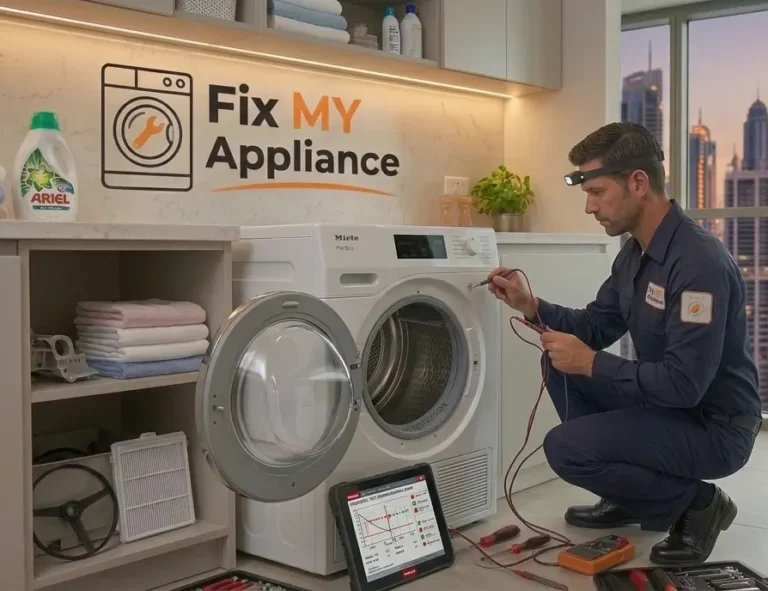
If your Washing Machine Not Draining Water problem continues after basic troubleshooting, our washing machine repair service in Dubai can identify the cause and provide a reliable solution.
Preventive Maintenance Tips for Washing Machine Drainage Problems
Regular maintenance can help prevent drainage problems and extend the life of your washing machine.
Clean the Drain Filter Regularly
Check and clean the drain pump filter to remove lint, coins, hair, and other debris that may restrict water flow.
Check Clothing Pockets
Before loading clothes, remove coins, tissues, hair clips, and other small objects that could enter the drainage system.
Avoid Overloading the Drum
Follow the manufacturer’s recommended load capacity. Overloading can affect drainage, spinning, and overall washing performance.
Use the Correct Detergent
Always use suitable detergent in the recommended quantity. Excessive detergent can create residue and affect appliance performance.
Inspect the Drain Hose
Periodically check the hose for kinks, damage, or incorrect positioning.
FAQs
1. Why is my washing machine not draining water?
Common causes include a clogged pump filter, blocked drain hose, faulty drain pump, overloaded drum, or electronic control problem.
2. Why are my clothes soaking wet after washing?
The appliance may not be draining correctly before starting the spin cycle. Check the drain filter, hose, and laundry load.
3. Can a clogged filter stop a washing machine from draining?
Yes. Lint, coins, and other debris can block the filter and restrict water flow.
4. Why is my washing machine humming but not draining?
The drain pump may be blocked or damaged. A professional technician should inspect persistent pump problems.
5. Can I fix a washing machine drainage problem myself?
Minor problems such as clogged filters, kinked hoses, and unbalanced loads may be resolved with basic troubleshooting. Internal mechanical or electrical faults require professional repair.
6. How much does washing machine repair cost in Dubai?
Repair costs depend on the fault, appliance model, and replacement parts required. Professional diagnosis can determine the exact repair solution.
7. When should I call a washing machine repair technician?
Contact a professional if cleaning the filter and checking the drain hose do not solve the problem, water repeatedly remains inside the drum, or the appliance develops leaks or unusual noises.
Conclusion
A Washing Machine Not Draining Water can leave clothes soaking wet, interrupt the spin cycle, and eventually cause additional appliance problems. Common causes include clogged filters, blocked drain hoses, faulty drain pumps, overloaded drums, door lock problems, and electronic faults.
Regular filter cleaning, checking clothing pockets, avoiding overloading, using the correct detergent, and inspecting the drain hose can prevent many drainage issues. However, persistent problems require professional diagnosis.
If your Washing Machine Not Draining Water problem continues in your Dubai home, contact Fix My Appliance for fast and reliable assistance. Our experienced technicians repair washing machines from all major brands and models across Dubai.