You walk into your laundry room and spot a puddle of water forming beneath your washing machine. It’s a sinking feeling that every Dubai homeowner dreads. A washing machine leaking water is not just a messy inconvenience—it can damage your floors, increase your water bills, and even pose electrical hazards if left unaddressed.
Dubai’s busy households rely heavily on washing machines, often running multiple loads daily. The combination of hard water, detergent residue, and frequent use can quickly lead to wear and tear on critical components. When you notice your washing machine leaking water from the bottom, it’s important to act fast—not just to prevent water damage, but to avoid more serious mechanical failures.
The good news is that most leaks can be diagnosed and fixed relatively quickly. This guide will walk you through the common causes, warning signs, and step-by-step solutions to stop your washing machine from leaking. If you’re dealing with a persistent leak in your Dubai home, understanding the root cause is the first step toward a solution.
What Is the Problem?
A washing machine leaking water from the bottom means water is escaping from the appliance during a fill, wash, or drain cycle. This leak can appear as a small puddle that grows over time, or as a sudden flood that soaks your laundry room floor.
Understanding the Impact
When your washing machine leaks water, several problems can arise:
- Floor damage – Water can warp wood flooring, stain tiles, or damage carpets
- Mould and mildew growth – Moist environments promote harmful mould
- Increased water bills – Even a small leak wastes significant water over time
- Electrical hazards – Water near electrical components creates shock risks
- Further appliance damage – Leaks can worsen internal component failures
Types of Leaks to Identify
Understanding where the washing machine leak is coming from helps narrow down the cause. Leaks commonly appear at:
- Front of the machine – often from the door seal or detergent drawer
- Back of the machine – typically from inlet or drain hoses
- Directly underneath – often from the pump, tub seal, or internal hoses
Common Causes of Washing Machine Leaking Water From Bottom
Understanding the root cause of your washing machine water leakage is essential for finding the right fix. Here are the most common culprits:
1. Broken or Worn Door Seal (Boot Seal)
The rubber door seal, or boot seal, prevents water from escaping during the wash cycle. Over time, it can become damaged, cracked, or develop holes. If any laundry gets caught between the door seal and the glass, it can also create a gap that allows water to leak . In Dubai’s heat, rubber seals can harden and crack more quickly.
2. Damaged or Loose Hoses
Your washing machine uses hoses to bring water in and drain it out. If these hoses are damaged, corroded, or have loose connections, your washing machine will leak water . According to Bosch, if water is leaking at the back of the machine, it’s likely that either the cold water fill hose or the waste water hose is responsible .
3. Faulty Pump or Pump Seal
The pump removes water from the machine during the drain cycle. If the pump seal fails or the pump itself is cracked, water can leak from the bottom. This is often indicated by water pooling directly underneath the appliance . As noted by appliance experts, a faulty water pump is one of the most common causes of a washing machine leak .
4. Clogged or Dirty Filter
A clogged catch basket or filter can cause washing machine water leakage . When the filter is blocked with lint, coins, or debris, water backs up and can overflow, leading to leaks. Regular cleaning of the filter helps prevent this problem.
5. Overloading the Machine
Exceeding the maximum load capacity can cause water to leak. Overloading strains the drum and seals, and can lead to poor sealing of the door. Make sure to follow the manufacturer’s recommended load capacity to avoid leaks .
6. Excessive Detergent or Wrong Type
Using too much detergent can produce excessive foam that blocks the water level system and causes water to leak . High-efficiency (HE) machines require specially formulated detergents to prevent over-sudsing. If you use capsules or pods in drawers not designed for them, it can also result in leaks from the detergent drawer .
7. Clogged Detergent Drawer
If the detergent drawer or the sprinkler plate above it is very dirty or covered in limescale, water may not flow correctly and can leak out . Regular cleaning of the drawer is essential in Dubai’s hard water conditions.
8. Broken Tub Seal or Gasket
Gaskets placed throughout the washing machine ensure that no water leaves the appliance. Over time, these gaskets can dry out or wear out and break. If there are weak spots, you will get a washing machine leaking water from bottom .
9. Damaged or Broken Coupler
A coupler is the plastic or rubber seal between the drum and the motor. If this breaks, it can cause the machine to leak from the bottom. As noted by appliance professionals, if your clothes are soaked after a wash cycle and the washer is leaking from the bottom, a broken coupler is a likely cause .
10. Pressure Switch Issues
The pressure switch measures the water level in the washing machine. If it’s faulty, it can overfill the machine, causing it to leak from the bottom .
11. Incorrect Installation
If the drain hose is not properly installed—such as being pushed too far down the drain pipe—it can cause siphoning or backflow, leading to leaks. This is especially common after a new machine installation.
12. Loose Connections
A simple loose connection at the water supply valve or a loose drain hose clamp can be the source of the leak. As DIY experts note, “check the fill hoses and pipework” and ensure all clamps are tight .
Warning Signs Your Washing Machine Is Leaking
A washing machine rarely starts leaking suddenly without warning. Here are the signs to watch for:
Visual Signs
- Puddles of water beneath the appliance
- Water stains on the floor surrounding the machine
- Rusty water marks on the back of the drum or on the floor
- Mould or mildew growth in the laundry area
- Warped or stained floors near the appliance
Performance Signs
- Clothes not spinning dry – indicates potential pump issues
- Longer cycle times than usual
- Error codes displayed on the machine (E23 or F23 for Bosch indicates a water leak)
- Unusual noises during the fill or drain cycle
Odour Signs
- Musty or damp smells coming from the machine or floor
If you notice any of these signs, don’t wait. Prompt action can prevent more serious damage to your appliance and your home. Book a professional inspection if you suspect a deeper issue.
Step-by-Step Solutions to Fix Washing Machine Water Leakage
If your washing machine is leaking water from the bottom, follow these troubleshooting steps in order:
Step 1: Safety First
Unplug the machine and turn off the water supply before attempting any inspection or repair . This prevents electrical hazards and further water damage.
Step 2: Identify the Leak’s Location
Place a piece of cardboard or newspaper under the machine and run a short cycle . Check where the water drips onto the cardboard to pinpoint the leak’s source. Check the following areas:
- Front of machine – Check door seal and detergent drawer
- Back of machine – Check inlet hoses and drain hose
- Bottom of machine – Check pump area and internal hoses
Step 3: Check and Clean the Door Seal
- Open the door and inspect the rubber seal for holes, cracks, or damage
- Remove any laundry stuck between the seal and door glass
- Clean the seal with a soft cloth to remove detergent residue and fluff
Step 4: Clean the Detergent Drawer
- Remove the drawer and clean it with warm water
- Check the sprinkler plate for limescale or debris
- Ensure you’re using the right detergent dose
Step 5: Check the Filter
- Locate the filter (usually at the bottom front of the machine)
- Place a shallow dish underneath
- Remove and clean the filter thoroughly
Step 6: Inspect Hoses and Connections
- Check inlet hoses for signs of damage or corrosion
- Ensure hose connections are tightened properly (by hand only)
- Check the drain hose for kinks or blockages
Step 7: Check Machine Level and Load
If the problem persists after these steps, the issue is likely more serious and requires professional washing machine repair .
When to Call a Professional Repair Service
Some washing machine leakage problems are not DIY-friendly. Contact a certified washing machine repair technician immediately if:
- The leak persists after completing all troubleshooting steps
- You notice a burning smell or sparks
- The machine is not draining at all
- The pump makes grinding noises
- Water is entering the machine even when not in use
- Error codes persist after resetting (E23 or F23 indicates a water leak)
- You suspect a faulty pump, tub seal, or internal component
Why Choose Professional Repair in Dubai
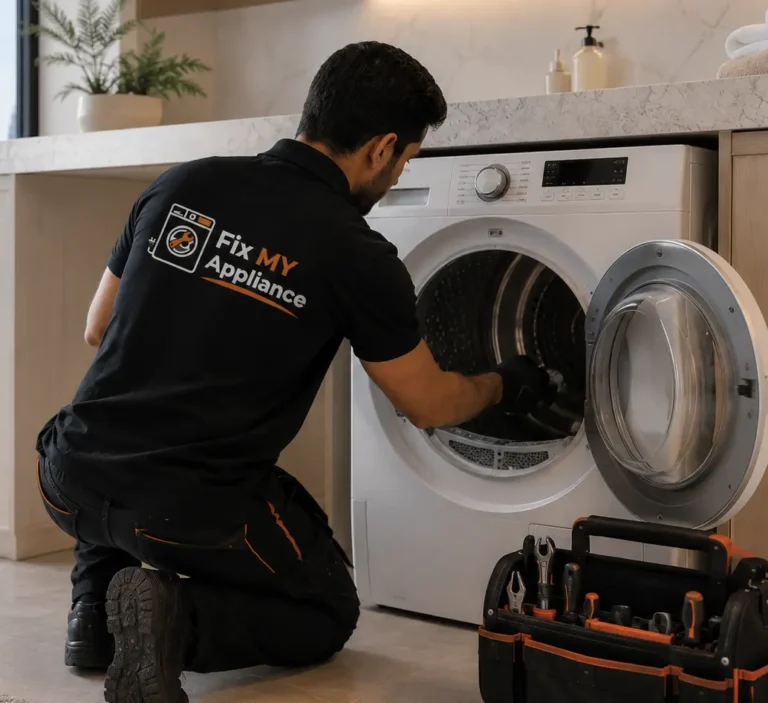
At Fix My Appliance Dubai , we understand Dubai’s unique challenges—hard water, high humidity, and heavy usage. Our certified technicians:
- Provide same-day service across all Dubai areas
- Use genuine spare parts for lasting repairs
- Offer transparent pricing with no hidden fees
- Back repairs with a service warranty
Whether it’s a seal replacement, hose repair, or a complete pump replacement, we ensure your machine is restored to perfect working order. Book your repair online today!
Preventive Maintenance Tips to Avoid Washing Machine Leaks
Prevention is always better than emergency repair. Follow these tips to keep your washing machine leak-free:
1. Check and Clean the Door Seal Monthly
2. Clean the Detergent Drawer Regularly
3. Use the Right Amount of Detergent
4. Inspect Hoses Every 3-6 Months
5. Don’t Overload the Machine
6. Clean the Filter Monthly
- Remove lint and debris to prevent blockages
- This simple task prevents many drainage and leak issues
7. Schedule Annual Professional Maintenance
A professional inspection once a year can catch problems early. Schedule your maintenance check with Fix My Appliance Dubai today.
FAQs
1. Why is my washing machine leaking water from the bottom but still working?
This often indicates a small leak from the pump seal, door seal, or a hose connection. The machine continues to function, but the leak will worsen over time and can cause water damage. Experts note that leaks are most likely from the drain plug or water pump in many cases . Get professional diagnosis to identify the exact source.
2. What does the E23 or F23 error code mean on my washing machine?
These codes indicate that your washing machine is leaking or there is water in the base plate . If you see this error, turn off the supply tap immediately and book a professional inspection .
3. Can too much detergent cause my washing machine to leak?
Yes, excessive detergent creates too much foam that can block the water level system and cause leaks . Reduce the amount of detergent and ensure you’re using HE detergent for high-efficiency machines .
4. How do I check if my washing machine drain hose is blocked?
Disconnect the drain hose and inspect it visually for blockages. Ensure the hose isn’t kinked. If water has been leaking at the back of the machine, it’s likely the waste water hose or the cold water fill hose is responsible .
5. Should I repair or replace a leaking washing machine?
Consider replacing if:
- The repair cost exceeds 50% of a new machine
- Your machine is over 10 years old
- Multiple components are failing
- It uses outdated, inefficient technology
For newer models, professional repair is usually more cost-effective. Consult our experts for an honest assessment.
6. How much does washing machine leak repair cost in Dubai?
Costs vary based on the issue, brand, and parts needed. Door seal replacement is a relatively minor repair, while a pump or tub seal repair involves more labour. Fix My Appliance Dubai offers transparent pricing with no hidden charges. Get a free quote today!
7. Can a faulty water pump cause a washing machine to leak?
Yes, a faulty pump or pump seal is one of the most common causes of a washing machine leaking water from the bottom. If the pump or its seal is damaged, water can escape during the drain cycle .
8. What should I do if my washing machine leaks during the fill cycle?
This often indicates a problem with the inlet hoses, the water valve, or a faulty pressure switch. Check the hose connections and consider replacing any damaged hoses. If the issue persists, contact a certified technician .
Conclusion
A washing machine leaking water from the bottom can be a stressful problem, but it’s rarely as serious as it seems. From simple fixes like cleaning the filter and checking hoses to more complex issues requiring professional attention, understanding the cause is the first step toward a solution. Dubai’s busy households depend on washing machines, and a persistent leak can quickly disrupt your routine—and damage your home.
While many leaks can be resolved with simple DIY troubleshooting, some problems—like pump failures, tub seal damage, or electrical faults—require professional expertise. At Fix My Appliance Dubai , we specialize in fast, reliable washing machine repair across all Dubai areas. Whether you need a simple hose replacement or a complete pump replacement, our certified technicians have you covered.
Don’t let a leaking washing machine ruin your floors or your day. Expert help is just a call away.