You finish a load of laundry and notice the dryer feels unusually hot to the touch. Or worse, your clothes come out scorched, and there’s a faint burning smell in the air. Dryer overheating is one of the most serious appliance problems in Dubai homes, and it’s not something you should ever ignore. Unlike other dryer issues that simply affect performance, overheating poses a genuine fire risk.
Dubai’s hot climate already puts extra strain on household appliances, and dryers are no exception. When internal temperatures climb beyond safe limits, components can fail, lint can ignite, and the consequences can be devastating. The good news is that dryer overheating is almost always caused by a handful of identifiable issues—and most of them are preventable with proper maintenance.
This guide will walk you through the causes, warning signs, and step-by-step solutions for dryer overheating. Whether you’re dealing with a hot drum, a burning smell, or a dryer that shuts off mid-cycle, understanding the root cause is the first step toward a safe solution. For more appliance care tips, explore our blogs .
What Is the Problem?
Dryer overheating occurs when the internal temperature of your dryer rises beyond the safe operating range. Under normal conditions, a dryer generates heat to evaporate moisture from clothes while simultaneously pushing hot, humid air out through the exhaust vent. When something disrupts this balance—whether it’s restricted airflow or a faulty component—heat builds up inside the drum and cabinet.
Why Overheating Matters
Dryer overheating is more than an inconvenience. It creates a chain of problems:
- Fire hazard – Lint is highly flammable. When temperatures rise, accumulated lint can ignite, leading to a house fire.
- Component damage – Excessive heat damages thermostats, heating elements, belts, and control boards.
- Scorched clothes – Fabrics can shrink, discolour, or develop burn marks.
- Higher energy bills – An overheating dryer works harder and consumes more electricity.
- Shortened lifespan – Constant overheating accelerates wear on every internal part.
How Common Is It in Dubai?
Dryer overheating is particularly common in Dubai homes because of the combination of high ambient temperatures, dusty air, and heavy usage. Dust and lint accumulate faster in the UAE, clogging vents and filters more quickly than in cooler climates. When you add Dubai’s already-hot environment to the equation, your dryer has to work harder to expel heat—making overheating far more likely without regular maintenance.
Common Causes of Dryer Overheating
Understanding why your dryer is overheating helps you fix the right problem. Here are the most common causes:
1. Clogged Lint Filter
This is the #1 cause of dryer overheating. Every load produces lint, and the lint filter catches most of it. But when the filter is full, airflow is restricted, and heat has nowhere to go. Even a partially clogged filter can cause temperatures to rise significantly. In Dubai’s dusty environment, filters clog faster than you might expect.
2. Blocked Exhaust Vent
The exhaust vent carries hot, humid air outside your home. Over time, lint and debris accumulate inside the vent duct, reducing airflow. A partially or fully blocked vent traps heat inside the dryer, causing dryer overheating. This is one of the most dangerous causes because it’s often invisible—the blockage builds up inside the wall or duct where you can’t see it.
3. Faulty Cycling Thermostat
The cycling thermostat regulates the temperature inside the drum. It turns the heating element on and off to maintain the correct temperature. When this thermostat fails, it may keep the heating element running continuously, causing dryer overheating.
4. Defective High-Limit Thermostat
The high-limit thermostat is a safety device that cuts power to the heating element if temperatures get too high. If this thermostat fails, it won’t shut off the heat, allowing temperatures to climb dangerously.
5. Blown Thermal Fuse
The thermal fuse is another safety device that permanently cuts power if the dryer overheats. If your dryer has stopped heating entirely after an overheating incident, a blown thermal fuse is likely the reason. While this protects against fire, it also means the dryer won’t run until the fuse is replaced and the underlying cause is fixed.
6. Faulty Heating Element
A heating element that’s shorted or damaged can produce more heat than intended. This is less common than airflow issues but still a possible cause of dryer overheating.
7. Improper Installation
If the exhaust vent is too long, has too many bends, or is connected incorrectly, airflow is restricted. Poor installation is a common cause of dryer overheating, especially in homes where the dryer has been moved or replaced.
8. Overloading the Dryer
Packing too many clothes into the drum restricts airflow around the fabrics. The dryer has to run longer and hotter to dry the load, increasing the risk of overheating.
9. Worn Drum Seals or Blower Wheel
If the drum seals are worn or the blower wheel is damaged, air can escape inside the dryer instead of being pushed outside. This reduces airflow and causes heat to build up.
Warning Signs of Dryer Overheating
Recognizing the signs of dryer overheating early can prevent a dangerous situation. Watch for these indicators:
Physical Signs
- Dryer cabinet feels extremely hot to the touch
- Clothes are unusually hot when you remove them
- Scorched or burnt smell in the laundry room
- Clothes have brown or black scorch marks
- Lint filter or vent area is hot
Performance Signs
- Dryer shuts off mid-cycle – The thermal fuse or high-limit thermostat is tripping
- Clothes take longer to dry – Restricted airflow reduces efficiency
- Dryer runs but doesn’t heat – A blown thermal fuse has cut power
- Error codes on the display
Safety Signs
- Burning smell – This is a serious warning sign; stop using the dryer immediately
- Smoke from the dryer or vent
- Sparkling or unusual noises from the heating element area
If you notice any of these signs, stop using the dryer immediately. Book a professional inspection before using it again.
Step-by-Step Solutions to Fix Dryer Overheating
If your dryer is overheating, follow these troubleshooting steps in order:
Step 1: Clean the Lint Filter
Remove the lint filter and inspect it. If it’s covered in lint, peel it off and discard it. For a deeper clean, wash the filter with warm soapy water and let it dry completely before replacing it. Clean the filter after every single load—this is the simplest and most effective way to prevent dryer overheating.
Step 2: Inspect the Exhaust Vent
Disconnect the dryer from the vent and inspect the duct. Use a vent brush or vacuum to remove lint buildup. Check the entire length of the vent, including the exterior vent hood. If the vent is crushed, kinked, or excessively long, consider having it professionally rerouted.
Step 3: Check the Blower Wheel
Access the blower wheel (usually behind the rear panel) and check for lint or debris. A clogged blower wheel restricts airflow and causes dryer overheating. Clean it carefully and ensure it spins freely.
Step 4: Test the Cycling Thermostat
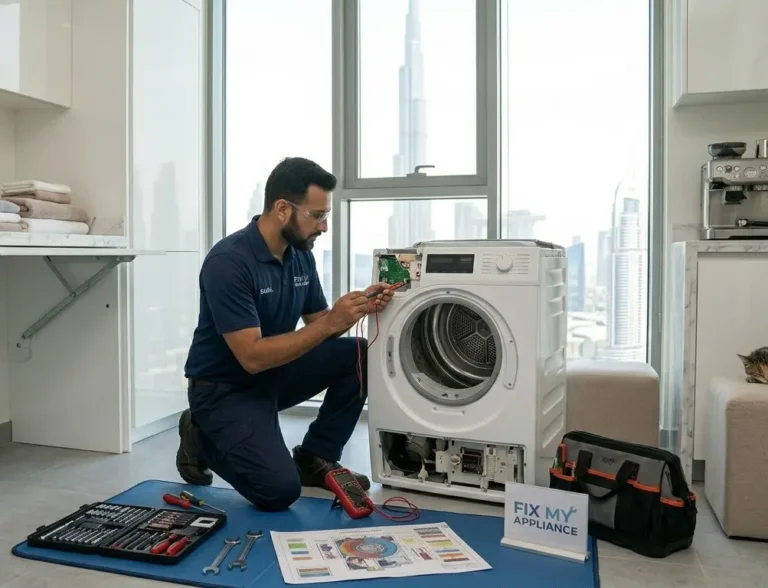
Using a multimeter, test the cycling thermostat for continuity. If it doesn’t show continuity, it needs replacement. This is a common cause of dryer overheating, especially in older machines.
Step 5: Test the High-Limit Thermostat
Test the high-limit thermostat in the same way. If it fails, replace it. These safety devices are inexpensive but critical for preventing dryer overheating.
Step 6: Check the Thermal Fuse
Test the thermal fuse for continuity. If it’s blown, replace it—but only after fixing the underlying cause. Replacing a thermal fuse without addressing the airflow issue will just lead to another blown fuse. Explore our services for professional thermal fuse replacement.
Step 7: Reduce Load Size
Avoid overloading the dryer. A good rule of thumb is to fill the drum about halfway to two-thirds full. This allows proper airflow and reduces drying time.
Step 8: Check the Installation
Ensure the exhaust vent is properly connected and not crushed behind the dryer. The vent should be as short and straight as possible, with minimal bends. If your vent is too long or has too many turns, consider professional rerouting.
If the problem persists after these steps, the issue is likely more serious and requires professional repair.
When to Call a Professional Repair Service
Some dryer overheating problems require professional expertise. Contact a certified dryer repair technician immediately if:
- The dryer continues to overheat after cleaning the lint filter and vent
- You smell burning or see smoke
- The thermal fuse has blown and needs replacement
- The heating element or thermostat is faulty
- The dryer shuts off mid-cycle repeatedly
- You notice scorch marks on clothes
- The vent system needs professional cleaning or rerouting
Why Choose Professional Repair in Dubai
At Fix My Appliance Dubai , we understand the unique challenges of Dubai’s climate—dust, heat, and heavy appliance usage. Our certified technicians:
- ✅ Provide same-day dryer repair across all Dubai areas
- ✅ Handle all major brands including Samsung, LG, Bosch, Whirlpool, and Siemens
- ✅ Use genuine spare parts for lasting repairs
- ✅ Offer transparent pricing with no hidden charges
- ✅ Specialize in vent cleaning and thermal safety repairs
Most repairs are completed within the first visit. Book your repair online today and make your dryer safe again!
Preventive Maintenance Tips to Avoid Dryer Overheating
Prevention is always better than emergency repair. Follow these tips to prevent dryer overheating:
1. Clean the Lint Filter After Every Load
This is the single most important maintenance task. A clean filter ensures proper airflow and prevents heat buildup.
2. Clean the Exhaust Vent Annually
Hire a professional to clean the entire vent system once a year, or do it yourself with a vent brush. In Dubai’s dusty environment, more frequent cleaning may be necessary.
3. Check the Vent for Kinks and Crushes
Ensure the vent hose behind the dryer isn’t crushed or kinked. Keep the dryer at least 4 inches from the wall.
4. Don’t Overload the Dryer
Follow the manufacturer’s capacity guidelines. Overloading restricts airflow and causes overheating.
5. Use the Right Cycle Settings
Avoid using high-heat settings for delicate fabrics. Use sensor settings that automatically stop when clothes are dry.
6. Inspect the Dryer Periodically
Check the drum, seals, and blower wheel for signs of wear or damage.
7. Install a Vent Alarm
A vent alarm alerts you when airflow is restricted, giving you early warning of a potential dryer overheating issue.
8. Schedule Annual Professional Maintenance
A professional check once a year can catch problems early. Schedule your inspection with Fix My Appliance Dubai.
FAQs
1. Why is my dryer overheating?
Dryer overheating is most commonly caused by a clogged lint filter or blocked exhaust vent. When airflow is restricted, heat has nowhere to go and builds up inside the drum. Other causes include faulty thermostats, a damaged heating element, or improper installation.
2. Is dryer overheating dangerous?
Yes, dryer overheating is a serious fire hazard. Lint is highly flammable, and when temperatures rise, accumulated lint can ignite. If you notice a burning smell or your dryer feels excessively hot, stop using it immediately and call a professional.
3. How do I know if my dryer is overheating?
Signs include an unusually hot cabinet, scorched clothes, a burning smell, the dryer shutting off mid-cycle, and error codes on the display. If you notice any of these, stop using the dryer and have it inspected.
4. Can I fix dryer overheating myself?
Some causes like a clogged lint filter or blocked vent are DIY-friendly. However, if the problem involves faulty thermostats, a blown thermal fuse, or heating element issues, professional repair is recommended. Contact us for expert help.
5. How often should I clean my dryer vent in Dubai?
In Dubai’s dusty environment, clean the lint filter after every load and have the exhaust vent professionally cleaned at least once a year. If you notice longer drying times, clean it more frequently.
6. Why does my dryer shut off mid-cycle?
A dryer that shuts off mid-cycle is often tripping its thermal fuse or high-limit thermostat due to dryer overheating. This is a safety feature designed to prevent fire. The underlying cause—usually restricted airflow—must be fixed before the dryer will run reliably again.
7. Should I repair or replace an overheating dryer?
If the dryer is under 8 years old and the repair cost is reasonable, professional repair is usually the best option. If the dryer is old and has multiple issues, replacement may be more cost-effective. Consult our experts for an honest assessment.
Conclusion
Dryer overheating is one of the most dangerous appliance problems in Dubai homes, but it’s also one of the most preventable. From clogged lint filters and blocked vents to faulty thermostats and thermal fuses, understanding the causes helps you take action before a small issue becomes a serious safety risk.
Regular maintenance—cleaning the lint filter after every load, inspecting the vent system annually, and scheduling professional checkups—dramatically reduces the risk of dryer overheating. When problems do arise, prompt professional repair ensures your dryer operates safely and efficiently.
Don’t ignore the warning signs. If your dryer feels too hot, smells like burning, or shuts off mid-cycle, it’s time to act. Whether you need a quick fix, routine maintenance, or emergency repair, Fix My Appliance Dubai is your trusted partner for dryer repair across Dubai. Our certified technicians provide same-day service, transparent pricing, and genuine spare parts to keep your home safe.