A dryer that runs but leaves your clothes damp can quickly become frustrating, especially in busy Dubai households where clean, dry laundry is part of the daily routine. If you’ve noticed your dryer taking longer than usual or failing to dry clothes completely, it’s a sign that something isn’t working as it should. Ignoring the issue can increase electricity bills, damage clothing, and even create safety hazards if lint buildup is involved.
The good news is that many dryer problems can be identified early and fixed before they become costly repairs. Whether the problem is a clogged lint filter, blocked vent, faulty heating element, or malfunctioning thermostat, understanding the cause helps you choose the right solution.
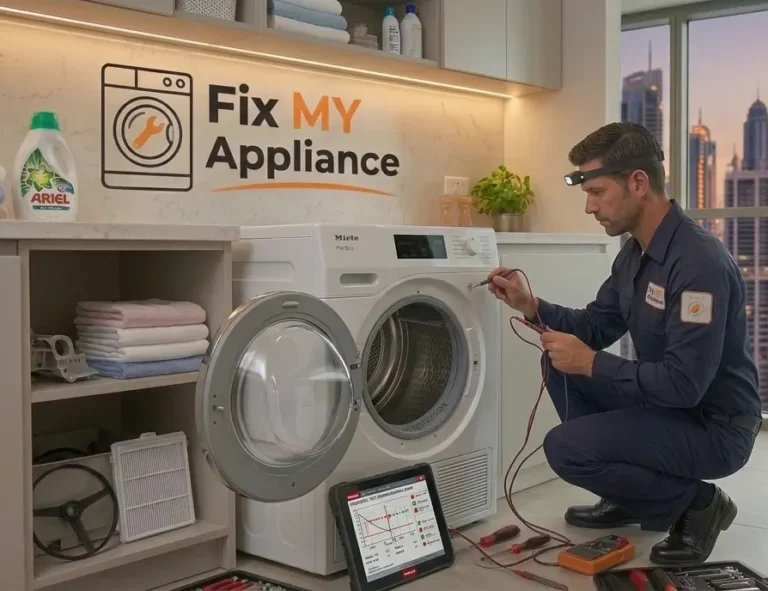
At Fix My Appliance, we provide professional dryer repair services in Dubai for all major brands and models. Our experienced technicians diagnose problems quickly and restore your appliance using quality replacement parts and advanced diagnostic tools. In this guide, we’ll explain why your dryer not drying clothes is a common issue, what causes it, and how you can fix or prevent it.
What Is the Problem?
One of the most common dryer complaints homeowners face is a machine that completes its cycle but leaves clothes partially wet or completely damp. Although the drum rotates normally, the appliance fails to generate enough heat or airflow to remove moisture effectively.
A dryer relies on several components working together, including:
- Heating element
- Thermostat
- Moisture sensor
- Air vent
- Lint filter
- Blower fan
- Control board
When any of these parts fail or become blocked, drying performance decreases significantly.
In Dubai, dryers often work harder due to frequent laundry loads in large households. Without regular maintenance, airflow restrictions and worn components become more common, reducing efficiency over time.
Common Causes of Dryer Not Drying Clothes
Clogged Lint Filter
A clogged lint filter is the most frequent reason a dryer fails to dry clothes properly.
When lint accumulates, airflow becomes restricted, preventing hot air from circulating inside the drum.
Signs include:
- Longer drying times
- Dryer becoming unusually hot
- Clothes remaining damp
- Higher electricity consumption
Cleaning the lint filter after every cycle is one of the easiest ways to maintain dryer performance.
Blocked Dryer Vent
Even with a clean lint filter, a blocked exhaust vent can trap hot, moist air inside the appliance.
Common causes include:
- Dust buildup
- Lint accumulation
- Bird nests
- Crushed vent hose
- Poor ventilation
A blocked vent forces your dryer to work harder while producing poor drying results.
Professional vent cleaning restores proper airflow and improves drying efficiency.
Faulty Heating Element
If your dryer spins but produces little or no heat, the heating element may have failed.
The heating element generates the warm air required to evaporate moisture from clothes.
Common symptoms include:
- Cold air inside the drum
- Extremely long drying cycles
- Wet clothes after a full program
- Dryer running normally without heat
Heating elements naturally wear out over time and usually require professional replacement.
Defective Moisture Sensor
Modern dryers use moisture sensors to determine when clothes are dry.
If the sensor becomes dirty or faulty, it may incorrectly detect moisture levels, causing cycles to end too early.
Symptoms include:
- Clothes still damp
- Dryer stops too soon
- Inconsistent drying performance
Cleaning the sensor with a soft cloth sometimes resolves the issue, while damaged sensors need replacement.
Malfunctioning Thermostat
The thermostat regulates the dryer’s internal temperature.
When it fails, the appliance may:
- Produce insufficient heat
- Overheat
- Shut off unexpectedly
- Run inconsistent drying cycles
A faulty thermostat should always be diagnosed by an experienced technician.
For expert dryer repair solutions trust Fix My Appliance.
Overloading the Dryer
Many homeowners overload the dryer to save time.
Unfortunately, overcrowded drums restrict airflow, preventing warm air from reaching every item evenly.
To improve drying:
- Follow the manufacturer’s load recommendations.
- Separate heavy towels from lightweight clothing.
- Shake clothes before placing them inside.
- Avoid stuffing the drum completely.
Proper loading improves drying efficiency and extends appliance life.
Worn Drum Seals
Damaged drum seals allow hot air to escape during operation.
As a result:
- Heat is lost
- Drying time increases
- Energy efficiency decreases
Replacing worn seals restores proper heat circulation and helps clothes dry faster.
Faulty Blower Fan
The blower fan pushes heated air throughout the drum and out through the exhaust system.
If the fan becomes damaged or obstructed:
- Air circulation decreases
- Clothes stay damp
- Dryer becomes less efficient
Professional inspection is recommended if unusual noises accompany poor drying performance.
Control Board Problems
Modern dryers depend on electronic control boards to manage heating cycles, sensors, and operating times.
A malfunctioning control board may cause:
- Heating interruptions
- Incomplete drying cycles
- Error codes
- Random shutdowns
Electronic repairs require specialized diagnostic equipment and should only be performed by qualified technicians.
Warning Signs Your Dryer Needs Immediate Attention
A dryer rarely stops drying clothes without showing warning signs first. Recognizing these symptoms early can help you avoid expensive repairs, reduce energy costs, and prevent further damage to the appliance.
Clothes Stay Damp After One Cycle
The clearest sign of a problem is when your clothes remain damp after a complete drying cycle. If you consistently need to run two or three cycles, your dryer isn’t operating efficiently and should be inspected.
Dryer Takes Much Longer Than Normal
If a load that usually dries in 45–60 minutes now takes over 90 minutes, restricted airflow, heating issues, or worn components may be reducing the dryer’s performance.
Little or No Heat
A dryer that tumbles normally but produces little or no heat often has a faulty heating element, thermostat, thermal fuse, or electrical component.
Burning Smell During Operation
A burning odor should never be ignored. Lint buildup around the heating element or inside the vent can overheat and create a fire hazard. Turn off the dryer immediately and arrange a professional inspection.
Unusual Noises
Grinding, squealing, banging, or rattling sounds may indicate worn drum rollers, damaged bearings, a faulty blower wheel, or loose internal parts. Prompt repairs can prevent more serious mechanical damage.
Error Codes on the Display
Many modern dryers display error codes when they detect problems with sensors, heating systems, or electronic controls. Consulting a professional technician can help identify the issue quickly.
Excessive Heat Around the Dryer
If the exterior of the dryer becomes unusually hot, poor ventilation or a blocked exhaust vent could be trapping heat inside the appliance. This reduces efficiency and increases safety risks.
Step-by-Step Solutions for a Dryer Not Drying Clothes
Some dryer problems have simple solutions, while others require professional repair. Here’s what you can do before calling a technician.
Clean the Lint Filter
The lint filter should be cleaned after every drying cycle.
A clean filter improves:
- Airflow
- Drying performance
- Energy efficiency
- Appliance lifespan
Wash the filter occasionally with warm water and mild soap to remove invisible fabric softener residue.
Inspect the Dryer Vent
Check the vent hose behind the dryer for:
- Kinks
- Crushed sections
- Lint buildup
- Blockages
If airflow feels weak outside the exhaust vent, professional vent cleaning may be required.
Avoid Overloading the Drum
Large loads restrict airflow and make drying uneven.
For best performance:
- Dry medium-sized loads.
- Separate heavy fabrics from lightweight clothing.
- Leave enough space for clothes to tumble freely.
This simple habit improves drying efficiency and reduces wear on the appliance.
Choose the Correct Drying Program
Using the wrong drying cycle can leave clothes damp.
For example:
- Heavy towels require longer drying times.
- Delicate fabrics need lower heat settings.
- Mixed loads may require sensor drying.
Check the Moisture Sensor
Locate the moisture sensor inside the drum and gently wipe it with a soft cloth dipped in white vinegar or mild detergent.
Schedule Professional Heating System Inspection
If basic maintenance doesn’t solve the problem, internal components such as the heating element, thermostat, thermal fuse, or control board may need testing.
At Fix My Appliance, our experienced team repairs dryers from all major brands, helping homeowners across Dubai restore their appliances quickly and efficiently.
When to Call a Professional Repair Service for Dryer Repair Service
While cleaning the lint filter or checking the vent can solve minor issues, many dryer problems require expert diagnosis and repair.
You should contact a professional dryer repair service if:
- The dryer produces no heat.
- Clothes remain damp after multiple cycles.
- The appliance displays error codes.
- You notice burning smells.
- The dryer shuts off unexpectedly.
- Loud noises continue during operation.
- The drum doesn’t rotate properly.
- The appliance repeatedly trips the circuit breaker.
Preventive Maintenance Tips to Keep Your Dryer Running Efficiently
Regular maintenance is the best way to prevent drying problems and extend the lifespan of your dryer. A few simple habits can improve performance, reduce energy consumption, and help you avoid costly repairs.
Clean the Lint Filter After Every Load
The lint filter collects fibers released from clothing during each drying cycle. A clogged filter restricts airflow, forcing the dryer to work harder and increasing drying times. Make it a habit to clean the filter after every load and wash it occasionally with warm water to remove detergent residue.
Inspect and Clean the Dryer Vent
Even if the lint filter is clean, lint can accumulate inside the vent hose over time. Inspect the vent regularly and have it professionally cleaned at least once a year to maintain proper airflow and reduce fire risks.
Avoid Overloading the Dryer
Stuffing too many clothes into the drum prevents hot air from circulating properly. Dry medium-sized loads and separate heavy items like towels and blankets from lightweight clothing for better drying performance.
Use the Right Drying Settings
Choose the correct drying program based on the type of fabric. Using sensor drying or the appropriate heat setting helps clothes dry evenly while preventing unnecessary wear on the appliance.
FAQs
1. Why is my dryer running but not drying clothes?
This usually happens due to a clogged lint filter, blocked vent, faulty heating element, defective thermostat, or a malfunctioning moisture sensor. A professional inspection can determine the exact cause.
2. Can a blocked dryer vent stop clothes from drying?
Yes. A blocked vent restricts airflow, trapping moist air inside the dryer. This significantly increases drying time and may even become a fire hazard if left unresolved.
3. How often should I clean my dryer’s lint filter?
You should clean the lint filter after every drying cycle. This improves airflow, shortens drying time, and helps your dryer operate safely and efficiently.
4. Is it safe to use a dryer that smells like it’s burning?
No. Turn off the appliance immediately. A burning smell often indicates excessive lint buildup or an overheating component that should be inspected by a qualified technician.
5. When should I call a professional dryer repair service in Dubai?
If your dryer isn’t producing heat, repeatedly leaves clothes damp, displays error codes, makes unusual noises, or shuts off unexpectedly, it’s time to contact a professional repair service.
6. Do you repair all dryer brands in Dubai?
Yes. Fix My Appliance repairs all major dryer brands and models, providing fast, reliable, and professional dryer repair services across Dubai.
Conclusion
A dryer not drying clothes is more than just an inconvenience—it can waste time, increase electricity bills, and indicate an underlying problem that may worsen if ignored. While simple maintenance tasks like cleaning the lint filter or checking the vent can solve minor issues, problems involving heating components, sensors, or electrical systems require professional attention.
At Fix My Appliance, we specialize in fast, dependable dryer repair services in Dubai for all major brands and models. By recognizing the warning signs early and following proper maintenance practices, you can keep your dryer operating efficiently and extend its lifespan. If your appliance continues to leave clothes damp despite your efforts, don’t delay professional repairs.
If you’re experiencing a dryer not drying clothes issue, contact Fix My Appliance today to schedule a professional inspection. We’ll diagnose the problem, provide an effective solution, and get your dryer back to delivering the reliable performance you expect.