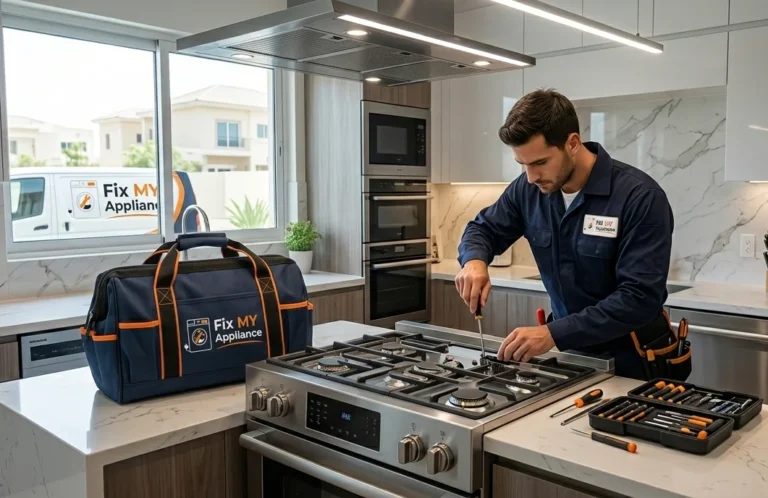
You’re in the middle of cooking, and suddenly the flame sputters and dies. You relight it, and seconds later, it goes out again. A stove flame goes off unexpectedly is one of the most frustrating and potentially dangerous cooking range problems in Dubai homes. It disrupts your cooking, wastes gas, and—most importantly—can lead to dangerous gas accumulation in your kitchen.
In Dubai’s busy households, where cooking is a daily ritual, a stove flame goes off mid-preparation can ruin an entire meal. Whether you have a gas stove with a faulty thermocouple, a clogged burner, or a gas supply issue, understanding the root cause is essential for both performance and safety.
The good news is that most flame-out issues have identifiable causes and straightforward fixes. This guide will walk you through why your stove flame goes off, the warning signs to watch for, step-by-step solutions, and when to call a professional. For more appliance care tips, explore our blogs .
What Is the Problem?
When your stove flame goes off shortly after ignition, it means the gas supply is being interrupted or the flame isn’t being sustained. This can happen in several ways:
Flame goes out immediately after lighting – The burner ignites but extinguishes within seconds. This usually points to a faulty thermocouple or flame sensor.
Flame goes out mid-cooking – The burner works fine initially, then shuts off unexpectedly. This can indicate a gas supply issue or an overheating safety device.
Flame goes out when you release the knob – Common in stoves with a thermocouple safety system. The sensor isn’t detecting the flame and shuts off the gas.
Flame flickers and dies – Often caused by low gas pressure, a clogged burner, or a draft in the kitchen.
Why This Matters
A stove flame goes off isn’t just annoying—it’s a safety concern. When the flame extinguishes but gas continues to flow, gas accumulates in your kitchen. A spark from a light switch, appliance, or even static electricity can ignite it, causing a fire or explosion. This is why modern gas stoves have safety devices designed to cut off gas when the flame goes out.
Common Causes of Stove Flame Goes Off
Understanding why your stove flame goes off helps determine the right fix. Here are the most common causes:
1. Faulty Thermocouple
The thermocouple is a safety device that detects whether the burner is lit. It’s a small metal rod positioned near the flame. When heated, it generates a small electrical current that keeps the gas valve open. If the thermocouple is dirty, bent, or faulty, it won’t detect the flame properly, and the gas valve shuts off—causing the stove flame goes off .
2. Clogged Burner Ports
Grease, food debris, and carbon buildup can block the tiny holes where gas escapes. A partially clogged burner may light initially but struggle to maintain a steady flame. In Dubai’s dusty environment, these blockages happen faster.
3. Low Gas Pressure
If the gas supply pressure is too low, the flame may be weak and prone to going out. This can be caused by a nearly empty gas cylinder, a faulty regulator, or low utility pressure.
4. Faulty Gas Regulator
The regulator controls gas pressure from the cylinder or supply line. If it’s faulty, it may not deliver a steady flow, causing the stove flame goes off intermittently.
5. Moisture in the Burner
After cleaning or a spill, moisture can remain in the burner ports. This can cause the flame to sputter and die until the moisture evaporates.
6. Drafts in the Kitchen
Strong drafts from windows, doors, or exhaust fans can blow out a weak flame. If your stove is positioned near a window or air vent, this can cause the stove flame goes off frequently.
7. Defective Flame Sensor
Modern stoves use a flame sensor (similar to a thermocouple) to detect the flame. If the sensor is faulty or dirty, it won’t signal the gas valve to stay open, causing the flame to go out.
8. Faulty Control Valve
The control valve regulates gas flow to the burner. If it’s worn or damaged, it may not stay open, cutting off the gas supply and extinguishing the flame.
9. Blocked Orifice
The orifice is a small opening that controls gas flow to the burner. If it’s blocked with debris or grease, the gas flow becomes inconsistent, causing the stove flame goes off .
Warning Signs Your Stove Is Struggling
A stove flame goes off often comes with other warning signs. Watch for these indicators:
- Flame goes out when you release the knob – Classic sign of a thermocouple issue
- Weak or uneven flame – Often a clogged burner or low pressure
- Yellow or orange flame instead of blue – Indicates incomplete combustion
- Gas smell when the burner is off – Serious safety hazard
- Flickering flame – Drafts, moisture, or low pressure
- Clicking sounds without ignition
- Soot marks around burners
- Burner takes longer to light than before
If your stove flame goes off is accompanied by a gas smell, stop using the stove immediately and call a professional. Book a safety inspection .
Step-by-Step Solutions to Fix Stove Flame Goes Off
If your stove flame goes off repeatedly, follow these troubleshooting steps in order:
Step 1: Check the Thermocouple
The thermocouple is the most common cause. Locate the small metal rod near the burner. Clean it gently with a fine abrasive pad or cloth to remove any carbon buildup. Ensure it’s positioned correctly in the flame path—if it’s bent away, the flame won’t heat it properly. If cleaning doesn’t work, the thermocouple may need replacement. Explore our services for professional thermocouple replacement.
Step 2: Clean the Burner Ports
Turn off the gas and remove the burner cap and head. Use a straight pin, needle, or small wire to clear clogged ports. Never use a wooden toothpick as it can break off inside. Wash the parts with warm soapy water and dry thoroughly before reassembling.
Step 3: Check for Moisture
If the burner was recently cleaned or there was a spill, moisture may be trapped in the ports. Allow the burner to dry completely, or use cool air from a hairdryer to speed up drying. Do not use a hot hairdryer directly on the burner.
Step 4: Check the Gas Supply
Ensure the gas supply valve is fully open and the gas cylinder has sufficient fuel. If you use a cylinder, check the level. If your building has a central gas supply, contact the building management to verify pressure.
Step 5: Check the Regulator
If you use a gas cylinder, the regulator may be faulty. Turn off the gas, disconnect the regulator, and reset it by reattaching and slowly opening the valve. If the problem persists, the regulator may need replacement.
Step 6: Check for Drafts
Ensure the stove isn’t directly in the path of a draft from windows, doors, or exhaust fans. Close windows or adjust fan speed if needed.
Step 7: Test the Control Valve
If the flame goes out when you release the knob, the control valve may not be holding. This is a more complex repair that requires professional attention.
Step 8: Check the Flame Sensor
If your stove has a flame sensor (common in modern models), clean it gently with a dry cloth. If the sensor is faulty, it needs professional replacement.
If the problem persists after these steps, the issue is likely more serious and requires professional stove repair .
When to Call a Professional Repair Service
Some stove flame goes off problems require professional expertise. Contact a certified stove repair technician immediately if:
- The flame still goes out after cleaning the thermocouple and burner ports
- You smell gas when the burner is off
- The thermocouple or flame sensor needs replacement
- The control valve is faulty
- The gas regulator isn’t functioning correctly
- You notice soot or yellow flames persistently
- You’re not comfortable working with gas components
Why Choose Professional Repair in Dubai
At Fix My Appliance Dubai , we understand the unique challenges of Dubai’s gas supply and kitchen environments. Our certified technicians:
- ✅ Provide same-day stove repair across all Dubai areas
- ✅ Handle all major brands including Bosch, Siemens, LG, Samsung, and Miele
- ✅ Use genuine spare parts for lasting repairs
- ✅ Offer transparent pricing with no hidden charges
- ✅ Specialize in gas safety and leak detection
Most repairs are completed within the first visit. Book your repair online today and get your stove working safely again!
Preventive Maintenance Tips to Avoid Stove Flame Goes Off
Prevention is always better than emergency repair. Follow these tips to prevent your stove flame goes off :
1. Clean Burner Ports Monthly
Remove food debris and grease that can block gas flow. Use a needle or wire to clear ports.
2. Clean the Thermocouple Regularly
Wipe the thermocouple with a soft cloth to prevent carbon buildup.
3. Check the Gas Supply
Ensure the gas cylinder has sufficient fuel and the valve is fully open.
4. Keep the Stove Dry
After cleaning, ensure burners are completely dry before use.
5. Avoid Drafts
Position the stove away from windows and exhaust fans that can blow out the flame.
6. Schedule Annual Professional Inspection
A professional check once a year can catch problems early. Schedule your inspection with Fix My Appliance Dubai.
7. Replace Worn Parts Promptly
If the thermocouple or control valve shows signs of wear, replace them before they fail completely.
FAQs
1. Why does my stove flame go off when I release the knob?
This is the most common symptom of a faulty thermocouple. The thermocouple detects the flame and keeps the gas valve open. If it’s dirty, bent, or faulty, it won’t signal the valve to stay open, and the stove flame goes off when you release the knob.
2. Why does my stove flame go out while cooking?
A stove flame goes off mid-cooking can be caused by low gas pressure, a clogged burner, a faulty regulator, or drafts. Check the gas supply, clean the burner, and ensure the stove isn’t in a drafty area.
3. Can I fix a stove flame that keeps going out myself?
Yes, some causes are DIY-friendly—cleaning the thermocouple, clearing burner ports, and checking the gas supply. However, if the problem involves the control valve, regulator, or internal components, professional repair is recommended.
4. Is it dangerous if my stove flame keeps going out?
Yes. If the flame goes out but gas continues to flow, gas accumulates in your kitchen. A spark can ignite it, causing a fire or explosion. If you smell gas, turn off the supply, ventilate, and call a professional immediately.
5. Why does my stove flame flicker and go out?
Flickering and going out is often caused by low gas pressure, moisture in the burner, or drafts. Check the gas supply and ensure the burner is dry.
6. How much does stove repair cost in Dubai?
Costs vary based on the issue and parts needed. Thermocouple replacement is at the lower end, while control valve or regulator replacement costs more. Get a free quote for an accurate estimate.
7. Should I repair or replace my stove if the flame keeps going out?
If the stove is under 10 years old and the repair cost is reasonable, professional repair is the best option. If the appliance is old and has multiple issues, replacement may be more cost-effective.
Conclusion
A stove flame goes off unexpectedly is a frustrating problem, but it’s usually caused by identifiable issues that can be resolved. From faulty thermocouples and clogged burner ports to low gas pressure and drafts, understanding the cause is the first step toward a solution. Many flame-out issues can be resolved with simple cleaning and adjustments, while others require professional repair.
Don’t ignore a stove flame goes off —especially if you smell gas. Prompt attention ensures your safety and keeps your kitchen running smoothly. Whether you need a quick fix, routine maintenance, or professional repair, Fix My Appliance Dubai is your trusted partner for stove repair across Dubai. Our certified technicians provide same-day service, transparent pricing, and genuine spare parts to keep your flame burning safely.